
Investor Relations
Qilin.Cloud is the global technology platform for composable commerce. We’re driven by our mission to enable developers creating fabulous products for every participant of e-commerce around the globe!
Let’s help them together, using the right tools at the right time!

Company Profile
Qilin.Cloud is a leading open software-as-a-service (SaaS) e-commerce technology platform that empowers developers, agencies, platforms and merchants of all sizes to build, innovate and grow their business.
Qilin.Cloud provides it’s stakeholdes with sophisticated enterprise-grade functionality, customization and performance with simplicity and ease-of-use. Thousands of B2C, B2B, D2C and M2C companies across the world and numerous industries use Qilin.Cloud to create beautiful, engaging technology solutions.
Headquartered in Bonn (Germany), Qilin.Cloud has offices in Stuttgart (Germany), Ho-Chi-Minh-City (Vietnam), Da Nang (Vietnam) and Can Tho (Vietnam). For more information, please visit qilin.cloud/company or follow us on GitHub and Facebook.
Qilin.Cloud is a registered trademark of E-CORP Holdings GmbH. Third-party trademarks and service marks are the property of their respective owners. For more information please visit qilin.cloud/brand-assets.
Year founded
Market Launch
Million $ GMV
Trustfully User
Offices Worldwide
Employees
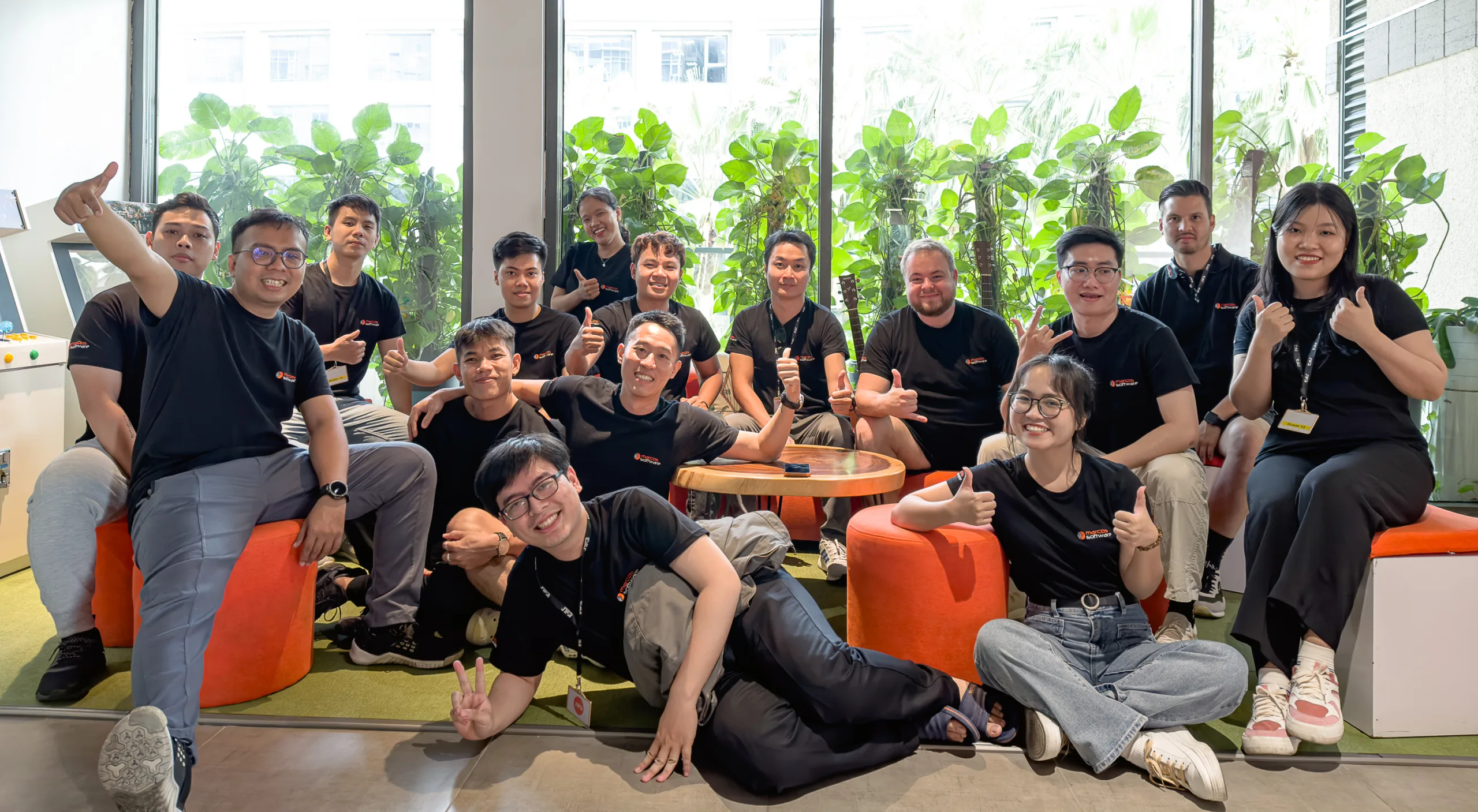
Our Vision
By 2040 every e-commerce related company around the world will use at least one product based on the Qilin.Cloud technology platform on their daily processes.
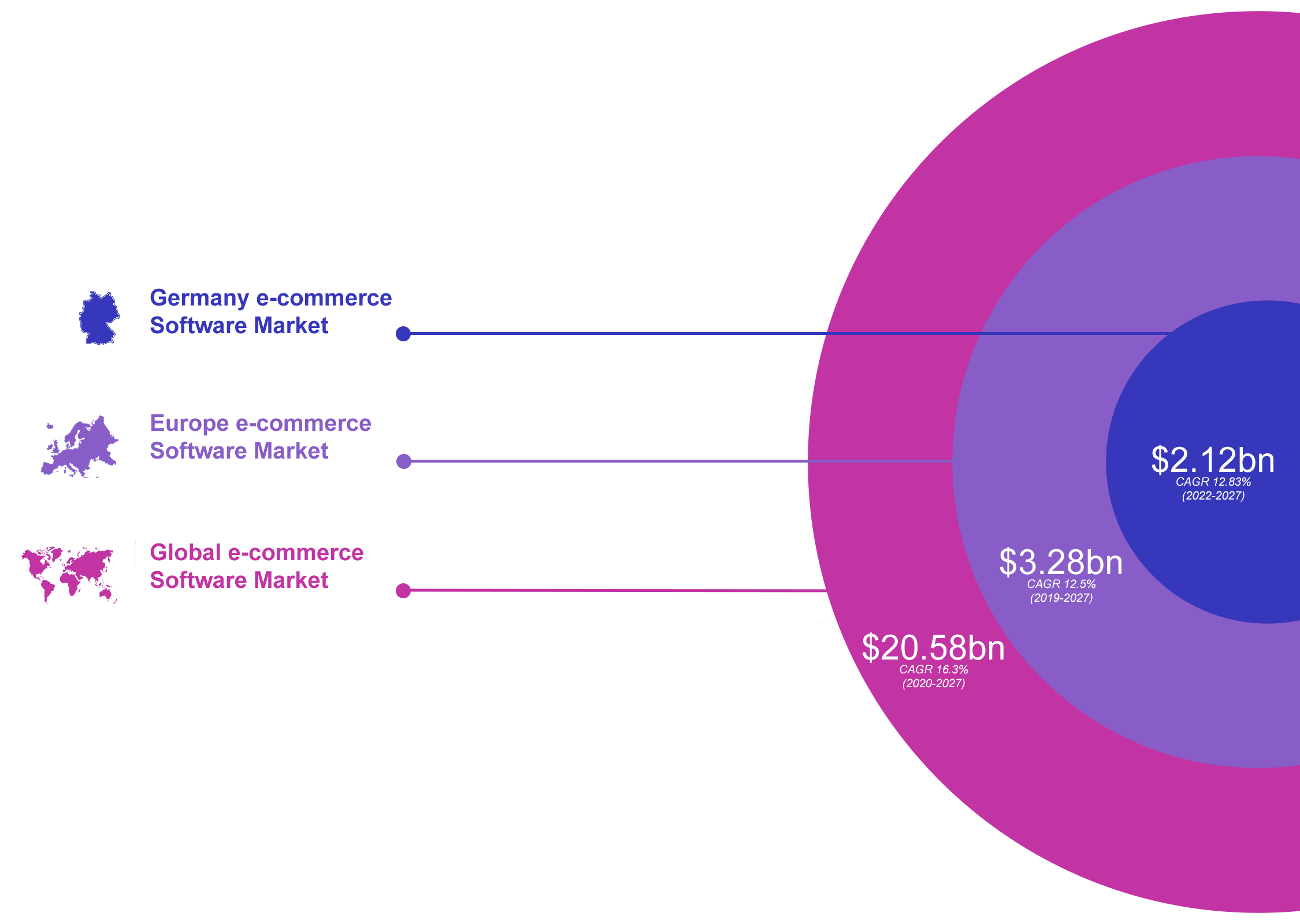
Market
We are targeting a never ending growth potential
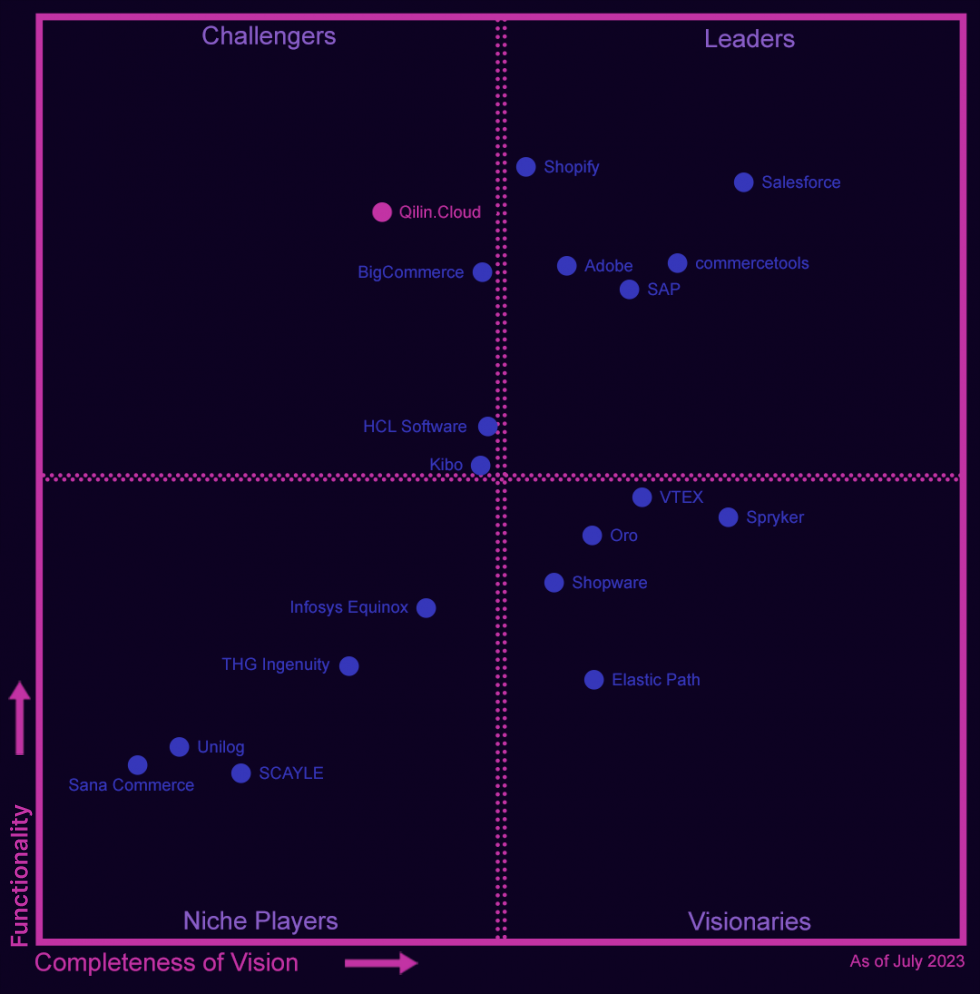
Magic Quadrant for Digital Commerce
Recent Posts
Distributed Tracing: Debugging Commerce Pipelines Like a Detective (Not a Psychic)
You know the classic debugging ritual: Something breaks on...
Operational Control: Queue Storage, Credentials, and Advanced Routing in the Portal UI
A platform reaches a certain point where “features” aren’t...
Pipeline Testing Mode: Pinned Data and Deterministic Debugging for Integrations
Every integration engineer has done this dance: change a...
Kaufland Offer Sync (Update-Only): The Safe Way to Keep Price and Stock Fresh
Commerce marketplaces are not playgrounds. If you’ve...
Error Handling & Manual Retry: Recovering from Failures Like a Grown-Up Platform
Every integration platform eventually faces the same...
The Claim Check Pattern: Moving Files Through Pipelines Without Melting Them
There’s a reason airports don’t hand you your suitcase and...
Our Mission
We’re driven by our mission to enable developers creating fabulous products for every participant of e-commerce around the globe! Qilin.Cloud will be the technical backbone for digital processes on worldwide e-commerce.
Let’s name it: The digital commerce operating system

Testimonials
“It helped us connect marketplaces with no effort”
Timo Böhling
Head of Marketplaces, OmniDeal
“We were able to scale much faster in the market”
Rudolf Ring
CEO, click-licht.de
“Multi marketplaces would have been unthinkable without it”
Alexander Sailer
“An effort that is worthwhile in retrospect”
Sascha Völkel
CEO, redzilla
Frequently Asked Questions
What does Qilin.Cloud do?
Qilin.Cloud is a leading open software-as-a-service (SaaS) e-commerce technology platform that empowers developers, agencies, platforms and merchants of all sizes to build, innovate and grow their business.
Qilin.Cloud provides it’s stakeholdes with sophisticated enterprise-grade functionality, customization and performance with simplicity and ease-of-use. Thousands of B2C, B2B, D2C and M2C companies across the world and numerous industries use Qilin.Cloud to create beautiful, engaging technology solutions.
Headquartered in Bonn (Germany), Qilin.Cloud has offices in Stuttgart (Germany), Ho-Chi-Minh-City (Vietnam), Da Nang (Vietnam) and Can Tho (Vietnam). For more information, please visit qilin.cloud/company or follow us on GitHub and Facebook.
Qilin.Cloud is a registered trademark of E-CORP Holdings GmbH. Third-party trademarks and service marks are the property of their respective owners. For more information please visit qilin.cloud/brand-assets.
Where is Qilin.Cloud's corporate headquarters?
Qilin.Cloud is headquartered (global + EMEA) in Bonn (Germany), with additional headquarters (for APAC) in Ho-Chi-Minh-City (Vietnam) and additional locations in Stuttgart (Germany), Da Nang (Vietnam) and Can Tho (Vietnam).
Operating as a remote-first organization, the geographical location is no barrier. What truly matters is the alignment with Qilin.Cloud’s company values and the unwavering pursuit of the extraordinary. Therefore, in addition to the officies, more than 50% of the employees work completly remotely.
Who are the members of the Qilin.Cloud's Leadership Team?
Who are the members of the Qilin.Cloud's Board of Directors?
Visit: qilin.cloud/career/#bod
When does Qilin.Cloud's fiscal year end?
December 31.
How do I contact Investor Relations with a question or request?
Please use the contact form below or write an email to In***************@***in.cloud
Would you like to become a Qilin.Cloud Investor?
Tell us about yourself, your background and your plans with us to become a Qilin.Cloud investor.
Have further questions? Contact us at In***************@***in.cloud
Proposed rewrite for Investor Relations
Review draft: The original live page remains untouched. The section below contains the agent’s proposed rewrite content for manual review.
A New Infrastructure Layer for Commerce Operations
Qilin.Cloud is building the operating system for commerce operations: orchestration, AI, process intelligence and extensibility in one enterprise platform.
Qilin.Cloud is the operating system for commerce operations. It separates business processes from technical systems so companies can change software, channels and service providers without rewriting core operational logic.
This page is written for Investors, Analysts. It should help readers understand not just what Qilin.Cloud claims, but how the platform behaves under real operational pressure: changing systems, channel sprawl, compliance requirements, scaling workloads and the constant need to move faster without turning architecture into an archaeological site.
Why this page matters
Use this page to explain why commerce operations is a large infrastructure category and how the monetization layers stack over time.
Qilin.Cloud is not a monolithic suite that asks teams to surrender architecture decisions in exchange for convenience. It is infrastructure for teams that want to keep business processes stable while they continue evolving their technical estate. That makes every serious page on the site part of a bigger operating model: define the business once, orchestrate the execution cleanly, observe every transaction and make changes without losing control.
The platform combines High-throughput data and process orchestration for synchronizations, routing decisions and cross-system workflows; API-first platform design so every important capability can be used programmatically instead of being trapped in the UI; Modular plugins and connectors that allow rapid prototyping, controlled rollout and targeted extension without monolithic lock-in. It also adds process intelligence and AI-native operational behavior so the system can do more than execute instructions. It can explain what happened, show where things drifted and escalate when intervention is needed.
A New Infrastructure Layer for Commerce Operations
Commerce companies have many systems but no durable operating layer above them. Qilin.Cloud is being built to become that layer.
Use this page to explain why commerce operations is a large infrastructure category and how the monetization layers stack over time. For Investor Relations, treat A New Infrastructure Layer for Commerce Operations as an operating concern rather than a marketing slogan. Connect it back to the core Qilin.Cloud model: stable business processes, replaceable systems, transparent operations and fast adaptation under change.
In practical terms, that means teams can define logic once and then execute it across changing software estates. A retailer might swap a marketplace connector, revise an ERP integration or split a process across several services without discarding the business policy behind the workflow. That decoupling is the architectural heart of Qilin.Cloud and it is what turns an integration project into reusable infrastructure.
This page should also make the human benefit visible. Operators gain fewer surprises, architects gain cleaner boundaries, finance teams gain cost transparency, and leadership gains a system that can scale with complexity instead of forcing every change through brittle one-off rebuilds. That combination of control, reuse and observability is what makes the platform strategically meaningful.
The thesis
Qilin.Cloud treats commerce operations as an infrastructure problem. The platform separates business processes from technical systems, making orchestration, monitoring, AI and process intelligence durable even when channels, vendors and applications change.
Use this page to explain why commerce operations is a large infrastructure category and how the monetization layers stack over time. For Investor Relations, treat The thesis as an operating concern rather than a marketing slogan. Connect it back to the core Qilin.Cloud model: stable business processes, replaceable systems, transparent operations and fast adaptation under change.
In practical terms, that means teams can define logic once and then execute it across changing software estates. A retailer might swap a marketplace connector, revise an ERP integration or split a process across several services without discarding the business policy behind the workflow. That decoupling is the architectural heart of Qilin.Cloud and it is what turns an integration project into reusable infrastructure.
This page should also make the human benefit visible. Operators gain fewer surprises, architects gain cleaner boundaries, finance teams gain cost transparency, and leadership gains a system that can scale with complexity instead of forcing every change through brittle one-off rebuilds. That combination of control, reuse and observability is what makes the platform strategically meaningful.
Monetization model
Use this page to explain why commerce operations is a large infrastructure category and how the monetization layers stack over time. For Investor Relations, treat Monetization model as an operating concern rather than a marketing slogan. Connect it back to the core Qilin.Cloud model: stable business processes, replaceable systems, transparent operations and fast adaptation under change.
In practical terms, that means teams can define logic once and then execute it across changing software estates. A retailer might swap a marketplace connector, revise an ERP integration or split a process across several services without discarding the business policy behind the workflow. That decoupling is the architectural heart of Qilin.Cloud and it is what turns an integration project into reusable infrastructure.
This page should also make the human benefit visible. Operators gain fewer surprises, architects gain cleaner boundaries, finance teams gain cost transparency, and leadership gains a system that can scale with complexity instead of forcing every change through brittle one-off rebuilds. That combination of control, reuse and observability is what makes the platform strategically meaningful.
Platform subscription as the primary recurring revenue layer
Platform subscription as the primary recurring revenue layer is not just a feature label on Investor Relations. It matters because commerce organizations rarely fail for lack of a single tool. They fail because each tool change drags process logic, data handling and operational responsibility along with it. Qilin.Cloud keeps those concerns separated so the business model survives infrastructure churn.
On Qilin.Cloud, platform subscription as the primary recurring revenue layer should be understood in relation to orchestration, traceability and controlled extensibility. Teams can roll out changes incrementally, observe outcomes transaction by transaction and decide whether the new path improves cost, reliability or delivery speed before broadening the rollout.
Transparent infrastructure usage as pass-through economics
Transparent infrastructure usage as pass-through economics is not just a feature label on Investor Relations. It matters because commerce organizations rarely fail for lack of a single tool. They fail because each tool change drags process logic, data handling and operational responsibility along with it. Qilin.Cloud keeps those concerns separated so the business model survives infrastructure churn.
On Qilin.Cloud, transparent infrastructure usage as pass-through economics should be understood in relation to orchestration, traceability and controlled extensibility. Teams can roll out changes incrementally, observe outcomes transaction by transaction and decide whether the new path improves cost, reliability or delivery speed before broadening the rollout.
Premium AI capabilities for operational automation and extension workflows
Premium AI capabilities for operational automation and extension workflows is not just a feature label on Investor Relations. It matters because commerce organizations rarely fail for lack of a single tool. They fail because each tool change drags process logic, data handling and operational responsibility along with it. Qilin.Cloud keeps those concerns separated so the business model survives infrastructure churn.
On Qilin.Cloud, premium ai capabilities for operational automation and extension workflows should be understood in relation to orchestration, traceability and controlled extensibility. Teams can roll out changes incrementally, observe outcomes transaction by transaction and decide whether the new path improves cost, reliability or delivery speed before broadening the rollout.
Future expansion through products built on the platform and ecosystem activity
Future expansion through products built on the platform and ecosystem activity is not just a feature label on Investor Relations. It matters because commerce organizations rarely fail for lack of a single tool. They fail because each tool change drags process logic, data handling and operational responsibility along with it. Qilin.Cloud keeps those concerns separated so the business model survives infrastructure churn.
On Qilin.Cloud, future expansion through products built on the platform and ecosystem activity should be understood in relation to orchestration, traceability and controlled extensibility. Teams can roll out changes incrementally, observe outcomes transaction by transaction and decide whether the new path improves cost, reliability or delivery speed before broadening the rollout.
Why now
Commerce stacks are increasingly fragmented, AI has become operationally useful, and enterprises are pushing back against black-box lock-in. That creates a strong opening for a platform that combines control, openness and intelligence.
Use this page to explain why commerce operations is a large infrastructure category and how the monetization layers stack over time. For Investor Relations, treat Why now as an operating concern rather than a marketing slogan. Connect it back to the core Qilin.Cloud model: stable business processes, replaceable systems, transparent operations and fast adaptation under change.
In practical terms, that means teams can define logic once and then execute it across changing software estates. A retailer might swap a marketplace connector, revise an ERP integration or split a process across several services without discarding the business policy behind the workflow. That decoupling is the architectural heart of Qilin.Cloud and it is what turns an integration project into reusable infrastructure.
This page should also make the human benefit visible. Operators gain fewer surprises, architects gain cleaner boundaries, finance teams gain cost transparency, and leadership gains a system that can scale with complexity instead of forcing every change through brittle one-off rebuilds. That combination of control, reuse and observability is what makes the platform strategically meaningful.
Public investor framing
Keep this page factual. Avoid vanity metrics without verification. Emphasize architecture, category creation, revenue logic and operational leverage.
Use this page to explain why commerce operations is a large infrastructure category and how the monetization layers stack over time. For Investor Relations, treat Public investor framing as an operating concern rather than a marketing slogan. Connect it back to the core Qilin.Cloud model: stable business processes, replaceable systems, transparent operations and fast adaptation under change.
In practical terms, that means teams can define logic once and then execute it across changing software estates. A retailer might swap a marketplace connector, revise an ERP integration or split a process across several services without discarding the business policy behind the workflow. That decoupling is the architectural heart of Qilin.Cloud and it is what turns an integration project into reusable infrastructure.
This page should also make the human benefit visible. Operators gain fewer surprises, architects gain cleaner boundaries, finance teams gain cost transparency, and leadership gains a system that can scale with complexity instead of forcing every change through brittle one-off rebuilds. That combination of control, reuse and observability is what makes the platform strategically meaningful.
How Qilin.Cloud works in practice
In practical delivery terms, teams typically start with one or two painful processes: marketplace synchronization, product data movement, order routing, exception handling or reporting blind spots. Qilin.Cloud lets them isolate the business logic from the technical plumbing, implement the orchestration once and then iterate without rebuilding the whole stack whenever a software component changes.
That approach changes the economics of commerce infrastructure. Instead of repeatedly paying for tightly coupled integrations that become liabilities a year later, teams build reusable operational assets. Connectors, plugins, routing rules, processors, audit trails and AI-assisted controls can all become part of a long-lived platform layer instead of disposable project work.
The AI layer matters here because it is not bolted on as cosmetic copy assistance. It sits close to the operational data and can therefore do useful work: explain failures, highlight anomalies, recommend next actions and notify humans through web interface, Slack, Teams, email, WhatsApp, SMS and phone-based escalation paths. That makes the platform more than automation. It turns it into an operational control system.
Trust, compliance and Open Commerce
Large parts of the platform are visible through GitHub and designed around Open Commerce principles to reduce black-box dependence.
For large enterprises, that matters because platform evaluation is never only about features. It is also about governance, auditability, vendor behavior, supportability and future optionality. When a platform makes the logic and mechanics visible, review becomes easier, procurement risk falls and technical teams can reason about what they are adopting.
That is also why complete transaction history matters. Every meaningful change should be traceable: who initiated it, why it happened, what the initial state looked like and what the resulting state became. That is the foundation for process mining, operational accountability and credible AI assistance.
Commercial model and long-term leverage
Platform subscription, transparent infrastructure pass-through, premium AI capabilities and future ecosystem monetization.
That model reflects an infrastructure business rather than a thin feature business. Stable platform access creates recurring software revenue. Transparent usage keeps cost discussions honest. Premium AI and future ecosystem layers create expansion without forcing basic functionality into artificial upsells. For buyers, that means visibility. For investors, it means a layered monetization structure that can mature over time.
Most importantly, it aligns with how the platform creates value. The more operational complexity a company has, the more valuable architectural stability, observability and reusable extension points become. Qilin.Cloud is designed to capture that value by becoming the layer that commerce organizations do not want to rebuild every time the market changes.
Related pages for deeper evaluation
Qilin.Cloud should be understood through several connected layers: category definition, platform mechanics, AI operations, process intelligence, developer extensibility and commercial model. Use the pages below as the next reading path.